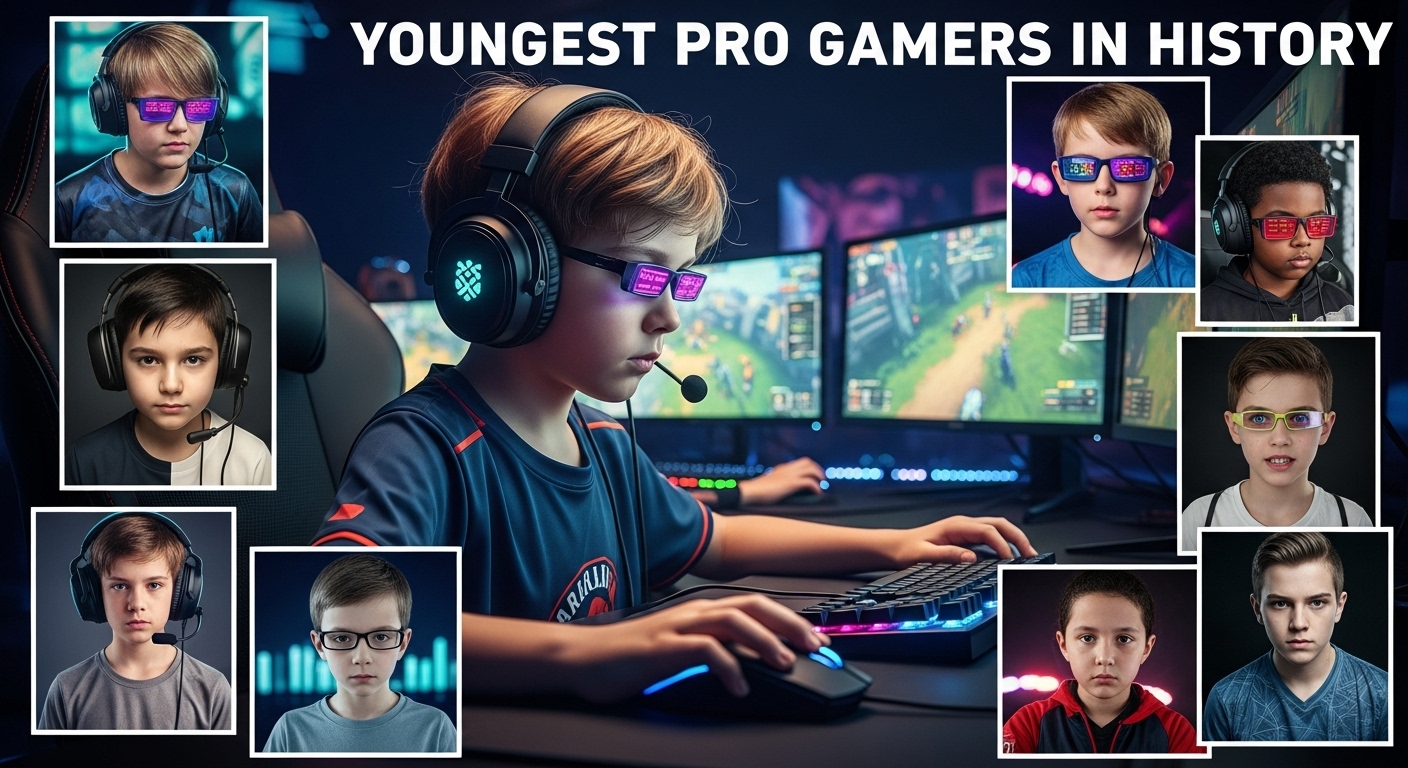
Youngest Pro Gamers in History
Introduction
In the fast-paced, ever-evolving world of esports, where lightning-fast reflexes, razor-sharp focus, and relentless practice are the keys to success, age is often considered an advantage rather than a limitation. Unlike traditional sports, where physical maturity plays a major role in performance, professional gaming has opened the door for young talents to rise to stardom much earlier. Some of the most recognized figures in esports history achieved fame and fortune before they even reached adulthood.
From children barely out of elementary school to teenagers dominating global tournaments, the youngest pro gamers in history prove that dedication, passion, and skill can outweigh age. This article explores the inspiring stories of these prodigies, their struggles, their victories, and how they helped reshape the perception of professional gaming worldwide.
The Rise of Young Talent in Esports
The gaming industry has grown into a multi-billion-dollar powerhouse, with esports tournaments filling arenas, drawing millions of online viewers, and offering prize pools that rival those of traditional sports. With such lucrative opportunities, it’s no surprise that younger players, especially digital natives who grew up surrounded by games, are stepping into the limelight earlier than ever.
Why Are Pro Gamers So Young?
Several factors explain why esports is dominated by younger competitors:
- Reaction Time Advantage – Studies show that reaction times peak in adolescence and early adulthood, which makes younger gamers naturally suited for fast-paced games like Fortnite, League of Legends, and Counter-Strike: Global Offensive.
- Early Exposure – Many kids grow up playing video games from a very young age, often reaching competitive levels before they turn 12.
- Low Physical Barriers – Unlike traditional sports, esports requires less physical development and strength, lowering the entry barrier for younger players.
- Flexible Training Schedules – With online gaming accessible from home, children can train intensively without the infrastructure required in sports like football or basketball.
- Supportive Communities – Online platforms like Twitch, Discord, and YouTube allow young players to showcase their skills, build followings, and attract sponsors.
Youngest Pro Gamers in History
Let’s dive into some of the most remarkable young prodigies who changed the game.
1. Victor “Lil Poison” De Leon III – The First Child Prodigy in Esports
Victor De Leon III, better known as Lil Poison, is often referred to as the youngest professional gamer in history. Born in 1998 in New York City, Victor started gaming at the astonishing age of 2 years old, playing Halo. By the time he was 6 years old, he competed in his first Major League Gaming (MLG) tournament, shocking audiences with his skill and composure.
At just 7 years old, he signed a contract with MLG, making him the youngest professional gamer ever recognized by Guinness World Records. His story not only inspired countless young gamers but also pushed esports into mainstream conversations about whether gaming could be a legitimate career.
Even though Lil Poison didn’t dominate major championships later in his career, his early breakthrough was proof that professional gaming could begin at an age most kids were still learning multiplication tables.
2. Kyle “Bugha” Giersdorf – The Teen Who Won $3 Million
Although not the absolute youngest pro gamer, Bugha made headlines worldwide in 2019 when he won the inaugural Fortnite World Cup at the age of 16. With nerves of steel and unmatched mechanical skill, Bugha dominated the solo competition and walked away with a staggering $3 million prize, instantly becoming a household name.
Bugha’s victory highlighted how esports had matured into a career path where teenagers could achieve financial independence and fame overnight. His story also underscored the importance of structured practice and support systems, as his family encouraged his career rather than dismissing gaming as a hobby.
3. Joona “Serral” Sotala – The StarCraft II Prodigy
From Finland, Serral emerged as one of the youngest talents in the world of StarCraft II. He entered the professional scene at just 15 years old and quickly became known for his mechanical precision and strategic brilliance. Unlike many young players who peak quickly and fade, Serral maintained consistent dominance, eventually being regarded as one of the best non-Korean players in StarCraft II history.
Serral’s journey proved that youth can be a foundation for long-term excellence in esports, especially when combined with discipline and adaptability.
4. Syed “SumaiL” Hassan – The Pakistani Teen Who Conquered Dota 2
Syed Sumail Hassan, better known as SumaiL, is one of the most iconic young figures in esports. Born in Pakistan and later moving to the United States, SumaiL joined the professional Dota 2 team Evil Geniuses at just 15 years old.
In 2015, only months after joining, he led his team to victory at The International 5 (TI5), the most prestigious tournament in Dota 2, earning over $1.6 million in prize money. SumaiL became the youngest player ever to win an International, solidifying his place in esports history.
His rise wasn’t just about individual skill; it was also a story of resilience, determination, and breaking barriers for South Asian representation in global esports.
5. Dominique “SonicFox” McLean – The Fighting Game Prodigy
Known for their dominance in the fighting game community, SonicFox entered competitive play as a teenager. By 15 years old, they were already competing at the highest levels in games like Mortal Kombat and Injustice: Gods Among Us.
What set SonicFox apart wasn’t just their age, but their consistent dominance across multiple fighting game titles. By their late teens, they had already won multiple Evolution Championship Series (EVO) titles, proving that young players could excel in reaction-based, high-pressure environments.
6. Joseph Deen – Signed at Just 8 Years Old
In 2021, the esports organization Team 33 signed Joseph Deen, an 8-year-old Fortnite player, to a professional contract. The signing raised eyebrows worldwide, as many questioned whether such a young child should be considered a “professional gamer.”
Joseph received a $33,000 signing bonus and a high-end gaming setup, making him one of the youngest players ever signed to a professional team. While he hasn’t yet won major tournaments, his story demonstrates how esports organizations are scouting talent at increasingly younger ages.
7. Mongraal (Kyle Jackson) – Fortnite’s Teen Sensation
British player Kyle “Mongraal” Jackson became a Fortnite sensation when he signed with Team Secret at just 13 years old. His aggressive playstyle, incredible building mechanics, and streaming personality made him a fan favorite.
Later, Mongraal joined FaZe Clan, one of the biggest esports organizations in the world, further cementing his career. His success showed how teenagers could build both competitive and content-driven careers in esports simultaneously.
8. Mark “Markieff” Exton – Rocket League’s Young Star
Rocket League, the car-soccer hybrid, has also seen its share of young stars. Markieff, from the UK, began competing at just 15 years old and quickly rose through the ranks. He later joined FlipSid3 Tactics, one of the top Rocket League teams at the time, and played at international events.
His early career set the stage for many young Rocket League pros who now dominate the competitive scene.
Challenges Faced by Young Pro Gamers
While their stories are inspiring, the journey of young professional gamers isn’t without challenges.
1. Education vs. Gaming
Balancing schoolwork with professional gaming commitments can be overwhelming. Many young players struggle to maintain academic performance, leading to tough decisions about prioritizing esports or traditional education.
2. Mental Health Pressures
The spotlight, expectations, and competitive stress can weigh heavily on children and teenagers. Anxiety, burnout, and even depression are risks many young players face.
3. Parental Concerns
Convincing parents that gaming can be a career is not easy. While some parents support their children, others worry about screen time, long-term health, and career sustainability.
4. Age Restrictions and Tournament Rules
Some games and tournaments enforce age limits, preventing younger players from competing officially. This can delay careers even if players already have the skills to compete.
5. Public Scrutiny
Being in the public eye at such a young age opens these players up to criticism, online harassment, and pressure that most kids never experience.
The Impact of Young Pro Gamers on Esports
The presence of young stars has significantly shaped the esports landscape:
- Mainstream Attention – Stories like Bugha’s $3 million win or Lil Poison’s early debut brought esports into mainstream headlines.
- Shifting Perceptions – They helped change the perception of gaming from a pastime to a legitimate career option.
- Marketability – Young players often attract younger audiences, making them highly valuable to sponsors and organizations.
- Longevity – Starting early allows players to build long careers, whether as competitors, streamers, or influencers.
Are Younger Players the Future of Esports?
As esports continues to grow, it’s likely that organizations will keep scouting younger players. Much like child actors or athletes in traditional sports, the esports industry is recognizing the advantages of nurturing talent early.
However, this also raises ethical questions about child labor, mental health protections, and long-term stability. Ensuring these prodigies are supported with proper education, mentorship, and wellness programs will be critical for the sustainability of esports.
Conclusion
The youngest pro gamers in history represent more than just incredible talent; they symbolize a generational shift in how society views competition, technology, and entertainment. From Lil Poison’s record-setting debut to Bugha’s multimillion-dollar victory, these stories prove that age is no barrier to greatness in esports.
At the same time, their journeys highlight the importance of balance, support, and responsibility in guiding young players toward success. As the esports industry continues to mature, the world will undoubtedly witness even younger prodigies rise to stardom. Whether or not that’s a positive trend depends on how the community, organizations, and families protect and nurture the next wave of gaming superstars.